đź’š Free content
đź”’ Premium content

How to Stop Guessing What Your Customers Want

Ditch the guesswork. Use this free worksheet to understand exactly what your customers want and create offers they’ll love.

Sign up for FREE to view the content

This content is only viewable for our members. Sign up for free to access our free content.

Sign up

Ever wish you could read your customers' minds?

You kind of can with a tool called the Empathy Map. It helps you understand how your customers think, feel, and act so you can build products, services, and messages that actually make sense to them.

Let’s break it down.
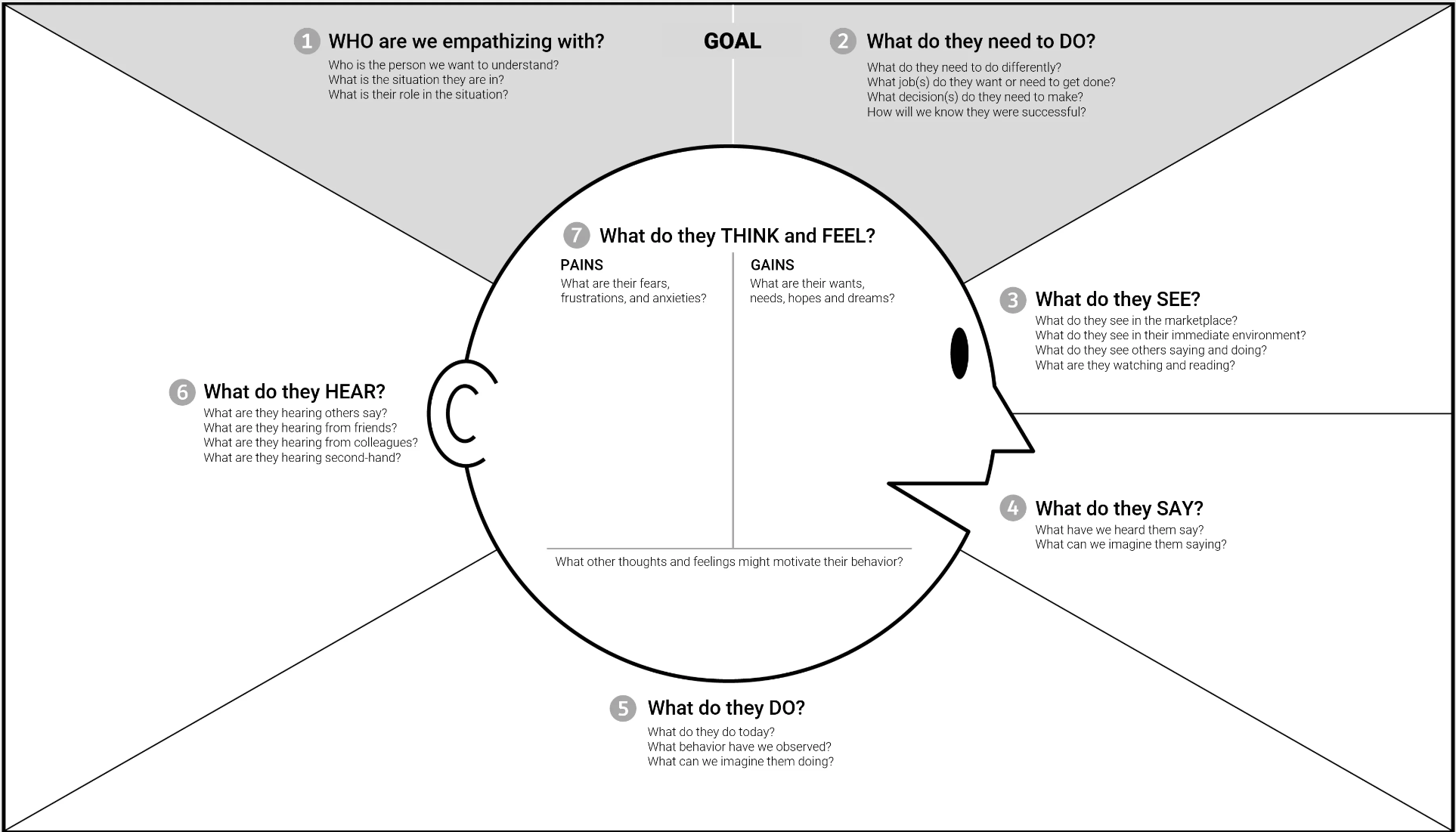
What’s an Empathy Map?

It’s a simple visual tool that helps you step into your customer’s shoes.
It focuses on four key areas:

  • SAYS: What they tell you (e.g., "I just want something easy to use")
  • THINKS: What’s on their mind (even if they don’t say it)
  • FEELS: Their emotions (frustrated? excited?)
  • DOES: What they’re actually doing (browsing competitors, asking friends, etc.)

It’s all about moving from assumptions to real understanding.

Why Should You Care?

Most founders jump straight into building stuff. But without understanding your users first, you’re guessing.

Empathy Maps help you:

  • Spot hidden customer needs
  • Improve your product and marketing
  • Build real connection and trust

Backed by research from Daniel Goleman (Emotional Intelligence) and Tim Brown (IDEO), empathy isn’t fluff, it’s smart business.

How to Build One (In 5 Easy Steps)

  1. Gather your team
    Involve marketing, support, product. Everyone sees something different.
  2. Choose one customer type
    Give them a name, role, and quick backstory.
  3. Draw 4 sections: Says, Thinks, Feels, Does
    Use our template, sticky notes, a whiteboard, or a digital tool.
  4. Fill in with real quotes and insights
    Use interviews, reviews, support tickets.
  5. Look for patterns
    What’s confusing them? What emotions pop up most?

Pro Tips

  • Use real quotes from customers
  • Collaborate with different teams
  • Keep it visual and fun (yes, emojis help!)
  • Update it every few months
  • Focus on the emotions, they drive action

When Should You Use It?

  • Before building a new feature or product
  • When crafting marketing campaigns
  • After collecting customer feedback

Basically, use it early and often.

Final Thought

If you’re building something for people, don’t start with features. Start with feelings. An Empathy Map helps you stop guessing and start connecting.

Want a free template?

Download our Document if you want to go through it yourself, the old way!

Instructor
Philippe Hong
Founder of Founder Foundry

Philippe has over 14 years of experience as a Founder, Mentor, and Designer. He has launched several ventures and worked with notable clients such as Westfield, Snappr (YC), Forage (YC), OpenLearning (ASX), and ZipCo (ASX). He also achieved recognition when his agency was listed in the AFR Fast Starter 23. Under his leadership, the agency developed strategies and designs for more than 50 high-growth startups, assisting them in raising millions in capital. His greatest passion lies in building businesses from the ground up.

Our other resources

Built by founder, loved by founders

This is some text inside of a div block.
Products
How to Validate Your Product Idea
You’ve got an idea, maybe even a product, but you’re still wondering: Is this really what people want?
Premium
10
modules
module
Text + worksheets
This is some text inside of a div block.
Marketing
How to Start Segmenting Your Audience
Struggling to Reach the Right Audience? Use This Simple Segmentation Worksheet
Free
1
modules
module
Worksheet
This is some text inside of a div block.
Sales
Sales Mindset & System Course
How to sell without sounding pushy and fake. Design a scalable sales system that aligns with how people make buying decisions
Premium
21
modules
module
Text + Worksheets